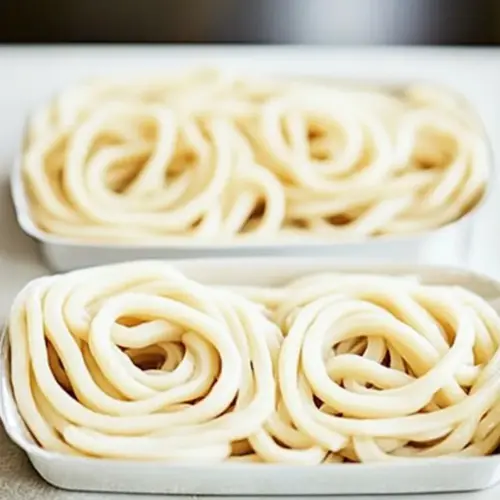
Udon Noodles
The ultimate comfort food, Udon Noodles are made from scratch for a chewy texture and authentic flavor. Perfect for a warm soup or tossed with vegetables, this easy weeknight dinner is sure to impress your family and friends.
Equipment
- Frying Pan
- Large Pot
- Chef's Knife
- Mixing Bowl
- Wooden Spoon
Ingredients
- 5 cups All-Purpose Flour sifted
- 1 tablespoon Kosher Salt
- 1.25 cups Water
Instructions
- 1. In a large mixing bowl, combine flour and salt. The salt should be evenly distributed, which will enhance the flavor of your noodles. Mix them together until thoroughly combined.
- 2. Add 1 1/4 cups of water to the mixture. Use your hands to mix until the dough starts to come together in a few large lumps. You may need to add more water if the dough feels too dry.
- 3. Firmly press and knead the dough, incorporating any loose flour until there’s none left. The mixture should feel tacky but not overly wet, allowing for easy handling.
- 4. If necessary, add a little more water, 1 tablespoon at a time, until you can incorporate all of the flour. This step is crucial for achieving the right consistency.
- 5. Lightly dust your work surface with flour. Knead the dough by folding and pressing firmly with your palm. You should be able to feel the gluten developing as the dough looks and feels fairly smooth, which should take about 5 minutes.
- 6. Form the dough into a ball, wrap it in plastic wrap, and let it rest at room temperature for 1 to 5 hours. This resting period allows the gluten to relax, making it easier to roll out later.
- 7. On a lightly floured surface with ample room, knead the dough again for a few minutes after the resting time. This step redistributes the moisture and ensures a consistent texture throughout the noodles.
- 8. Divide the dough into 4 equal-sized balls. Dust each ball with flour and cover them with plastic wrap until you’re ready to roll them out. This prevents them from drying out.
- 9. Use a rolling pin to roll out the dough. Rotate it 90 degrees occasionally, dusting with flour as needed to prevent sticking. Aim for a thickness between 1/8 inch to under 1/4 inch.
- 10. If the dough proves difficult to roll out, cover it with plastic wrap and let it rest for 10 minutes. This short break allows the gluten to relax, making the dough easier to handle.
- 11. Once rolled, fold the sheet of dough into thirds (like a letter fold) and then slice widthwise into approximately 1/8 inch thick noodles. Use a sharp knife for clean cuts.
- 12. Gently separate the noodles and toss them with a little bit of flour to prevent sticking. It’s best to cook them right away for optimal freshness.
- 13. Bring a large pot of water to a rolling boil and prepare a large bowl of icy water nearby. This will help stop the cooking process quickly after boiling.
- 14. Add the noodles to the boiling water, stir frequently, and add 1/4 cup of fresh water if necessary to prevent bubbling over. Cook until fully cooked but not mushy, which usually takes about 7 to 12 minutes, depending on the thickness.
- 15. Drain the noodles and immediately transfer them to the icy water. This helps firm them up and stop the cooking. Briefly rub the noodles with your hands to wash away some of the starch, then drain from the cold water.
Notes
- Tip 1: After cooking, leftover noodles can be stored in an airtight container in the fridge for up to three days. Just reheat them in boiling water for a quick meal.
- Tip 2: You can freeze uncooked noodles for up to three months. Lay them flat in a single layer on a baking sheet, then transfer to a freezer bag.
- Tip 3: Serve Udon Noodles with various toppings like green onions, seaweed, or vegetables for added flavor and nutrition.
- Tip 4: Consider adding a splash of soy sauce or sesame oil to boiling water for extra flavor while cooking the noodles.
- Tip 5: Add chili oil or fresh chili to your serving for an added kick. It pairs beautifully with the chewy texture of the noodles.
- Tip 6: Experiment with different broths such as miso or dashi for a delicious base that complements the Udon Noodles.